

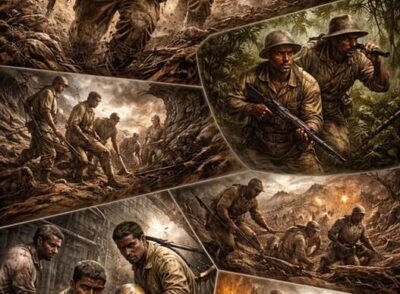
This is an uncomfortable part of military history that is often minimized or ignored.
In multiple wars, especially World War I and World War II, Black soldiers were frequently assigned the most dangerous, exhausting, and deadly duties, not because of strategy, but because of racist beliefs about their worth.
Here are the documented facts:
- Front-line assaults with high casualties (WWI)
-
Black soldiers in European colonial units (such as France’s Senegalese Tirailleurs) were often used in direct frontal attacks.
-
French military doctrine at the time promoted the idea that African troops were more “suited” for shock assaults, a belief rooted in racism, not evidence.
-
These units suffered extremely high casualty rates.
- Scouting and advanced missions with limited protection
-
In both WWI and WWII, Black units were sometimes sent on dangerous reconnaissance or advance operations with less backup than white units.
-
Their lives were often treated as more “replaceable.”
- Forced into the most hazardous labor roles
In the U.S. military, especially, Black soldiers were disproportionately assigned to:
• digging trenches
• clearing mines
• unloading ammunition
• building roads and airfields under fire
These jobs carried constant risk of death, often without recognition or protection.
Port Chicago Disaster (1944)
Black sailors were forced to load explosives without proper training or safety measures.
An explosion killed 320 men, most of them Black. Survivors who protested unsafe conditions were court-martialed, not protected.
Segregation and expendability mindset
Many white commanders openly believed Black soldiers were less valuable or more expendable.
This belief influenced assignments, equipment access, medical care, and rescue priorities.
Important truth:
This does not mean Black soldiers were cowards or unskilled — the opposite is true.
When finally given equal training and opportunity (like the Harlem Hellfighters or Tuskegee Airmen), Black troops performed with distinction and bravery.
The problem was never ability. It was racism in command decisions. History matters because how a country values lives in war often reflects how it values them in peace.
LARRY D.ROBERTS…