

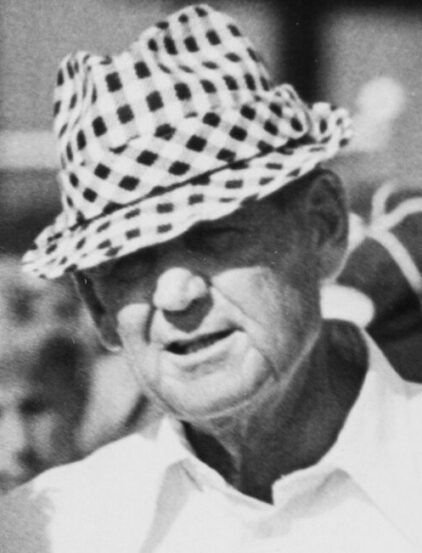
Long before Alabama football was integrated, two talented young men from Gadsden experienced a moment that revealed both the promise and painful limitations of their time.
By Theresa Beverly
Paul “Bear” Bryant is remembered as one of the greatest coaches in college football history. But another part of his legacy is connected to the gradual integration of football at the University of Alabama and to talented Black athletes who, for many years, were denied the opportunity to play for major Southern universities.
One little-known story brings that history home to Gadsden, Alabama.
In the late 1950s, two young football players from Carver High School in Gadsden, John R. Smith and Bobby Miliner (photos not available), traveled with their team to Tuscaloosa.
According to a local recollection of the encounter, Bryant had been impressed by the Carver players. He came aboard their bus and spoke to Smith and Miliner, expressing how much he wished talented young men like them could play for his program.
But this was the segregated South of the 1950s. Alabama’s major white universities still maintained a racial color line in athletics. Black athletes could possess extraordinary talent and still be excluded from opportunities available to white players. Alabama and Auburn did not even begin identifying Black high-school football prospects until the late 1960s.
For Smith and Miliner, therefore, Bryant’s words carried a painful reality: their ability could be recognized, but the system of their time would not give them the opportunity.
John R. Smith an Exceptional Carver Athlete
John’s athletic accomplishments are not simply part of oral history.
The Gadsden Messenger later profiled John R. Smith, documenting an impressive athletic career at Carver. Smith participated in football, basketball, baseball, and track and was a member of Carver’s outstanding 1957 football team.
After graduating from Carver in 1960, Smith continued his athletic career at Tennessee State University, where he attended on a track scholarship.
That history adds significance to the story of Bryant stepping onto the Carver bus. These were not simply young men who enjoyed playing football. They were accomplished Black athletes growing up at a time when segregation severely limited where their talent could take them.
Change Eventually Came to Alabama
More than a decade later, Alabama football finally began to change.
In 1969, Bryant’s staff recruited Wilbur Jackson of Carroll High School in Ozark. Jackson became the first Black football player to receive an athletic scholarship from the University of Alabama. Because freshmen could not play varsity football at the time, he did not take the varsity field until 1971.
That timeline is important because it corrects a popular version of Alabama history.
USC famously defeated Alabama 42-21 in 1970 with Black players playing prominent roles. That game became a symbol of the changing face of Southern football, but Bryant had already recruited Jackson before the USC game occurred.
In 1971, Jackson and junior-college transfer John Mitchell joined Alabama’s varsity team. Mitchell became the first Black football player to appear in a varsity game for Alabama.
The transformation continued. Mitchell became Alabama’s first Black football co-captain and later joined Bryant’s staff. Black players who played under Bryant later described him as demanding but fair in his treatment of them.
The Gadsden Chapter
Bryant’s role in integration was complicated. He coached Alabama for years while its football program remained segregated, and historians have documented both the institutional resistance surrounding him and questions about how quickly he pushed for change. Alabama’s racial barriers were ultimately dismantled through a much broader civil rights struggle involving Black students, athletes, activists, courts, and changing institutions.
But the story remembered by John Smith and Bobby Miliner provides an important local perspective.
Years before a Black athlete could put on an Alabama football uniform, Bryant apparently saw something in those young men from Carver High that segregation could not erase:
Talent.
The tragedy was that the South of the 1950s could recognize that talent while simultaneously denying those young men the opportunity to use it at institutions such as the University of Alabama.
Today, generations of Black athletes have helped build Alabama football into one of the country’s most celebrated programs.
And perhaps one small piece of that much larger history can be traced back to a bus carrying football players from Carver High School in Gadsden, where two young men named John R. Smith and Bobby Miliner heard words from Bear Bryant that they would remember long after the game was over.