

By Dr. Walter L. Scott Jr.
July 25, 2026
July 25, 2026

Throughout my life, I have sat at the feet of my elders, listening to their stories of hardship and the constant racism that so-called Black men and women endured during their lifetimes. Many of them believed, even until their final days, that much more work remained to be done in the pursuit of true equality. As I listened to their experiences and gathered knowledge over the years, I came to understand that, although there were moments of progress and small victories during the Civil Rights Movement, there had never been a lasting victory over racism itself.
After generations of struggle, pain, and temporary triumphs, our people still have not found a permanent solution to eradicate racism. Now, nearly fifty years into my own life, I found myself asking the same question that previous generations had asked: What is the real solution?
The answer did not begin to take shape until I discovered the works of Neely Fuller Jr. and Dr. Frances Cress Welsing. I devoted myself to studying their writings and carefully analyzing their ideas. Through their teachings, I began to realize that many of us had misunderstood how white supremacy operates. It is far more than the individual acts of prejudice we witness each day. It is a system that reaches much deeper than many people recognize.
Neely Fuller Jr.’s well-known statement captures this idea perfectly: “If you do not understand White Supremacy (Racism), what it is and how it works, everything else that you understand will only confuse you.” Those words challenged me to think differently. I came to believe that one of the greatest reasons African Americans have struggled to overcome racism is that we have not fully understood the system itself. Seeing racism does not necessarily mean understanding its structure or how it continues to sustain itself.
Many of us have believed that racism could be defeated through religion, voting, legislation, or by publicly exposing acts of injustice. While these efforts have certainly produced important victories, I believe they often function as temporary remedies rather than permanent solutions. They address individual events but rarely dismantle the larger system that allows those events to continue.
For a time, some people even believed that white supremacy and racism had nearly disappeared. Then came what many considered a wake-up call in 2017 with the election of Donald Trump. Individuals who had previously concealed their beliefs suddenly became far more open in expressing racial hostility. Many African Americans were caught by surprise. Even longtime neighbors and friends who had once shared meals, conversations, and Saturdays watching Alabama or Auburn football together openly embraced political positions that seemed completely different from those they had expressed before. Whether one agrees with that interpretation or not, the moment caused many Americans to reevaluate assumptions they had made about race relations in the United States.
Neely Fuller Jr. expands upon these ideas in The United-Independent Compensatory Code/System/Concept. According to his theory, everything a person says or does each day has either a direct or indirect effect on everyone else in society. He identifies what he calls the Nine Major Areas of People Activity:
- Economics
- Education
- Entertainment
- Labor
- Law
- Politics
- Religion
- Sex
- War and Counter-War
According to Fuller, these nine areas shape virtually every aspect of human interaction and provide the framework through which systems of power operate. Whether one agrees entirely with his conclusions or not, his work encourages readers to examine society beyond isolated incidents and to consider the broader structures that influence everyday life.
In future articles, I intend to examine each of these nine areas individually and discuss how, in my view, white supremacy has influenced not only people of African descent throughout the world but society as a whole. My goal is not simply to identify problems but to encourage thoughtful discussion about the systems that continue to shape our communities and our understanding of justice.
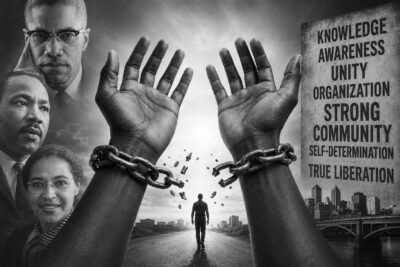
True liberation begins with knowledge. Before lasting change can occur, we must first understand the forces that have shaped our history, our present condition, and our future. Only through knowledge, critical thinking, and honest examination can we begin the journey toward genuine liberation.
Reference
Fuller, N. (2026). Produce Justice Counter-Racism Code: The Nine Areas of People Activity. https://producejustice.com/9-areas/